TomaConta: matching flow
Hiring forced the family to contact carer by carer. We flipped the flow: one listing, several applications, one choice.
Visit tomaconta.com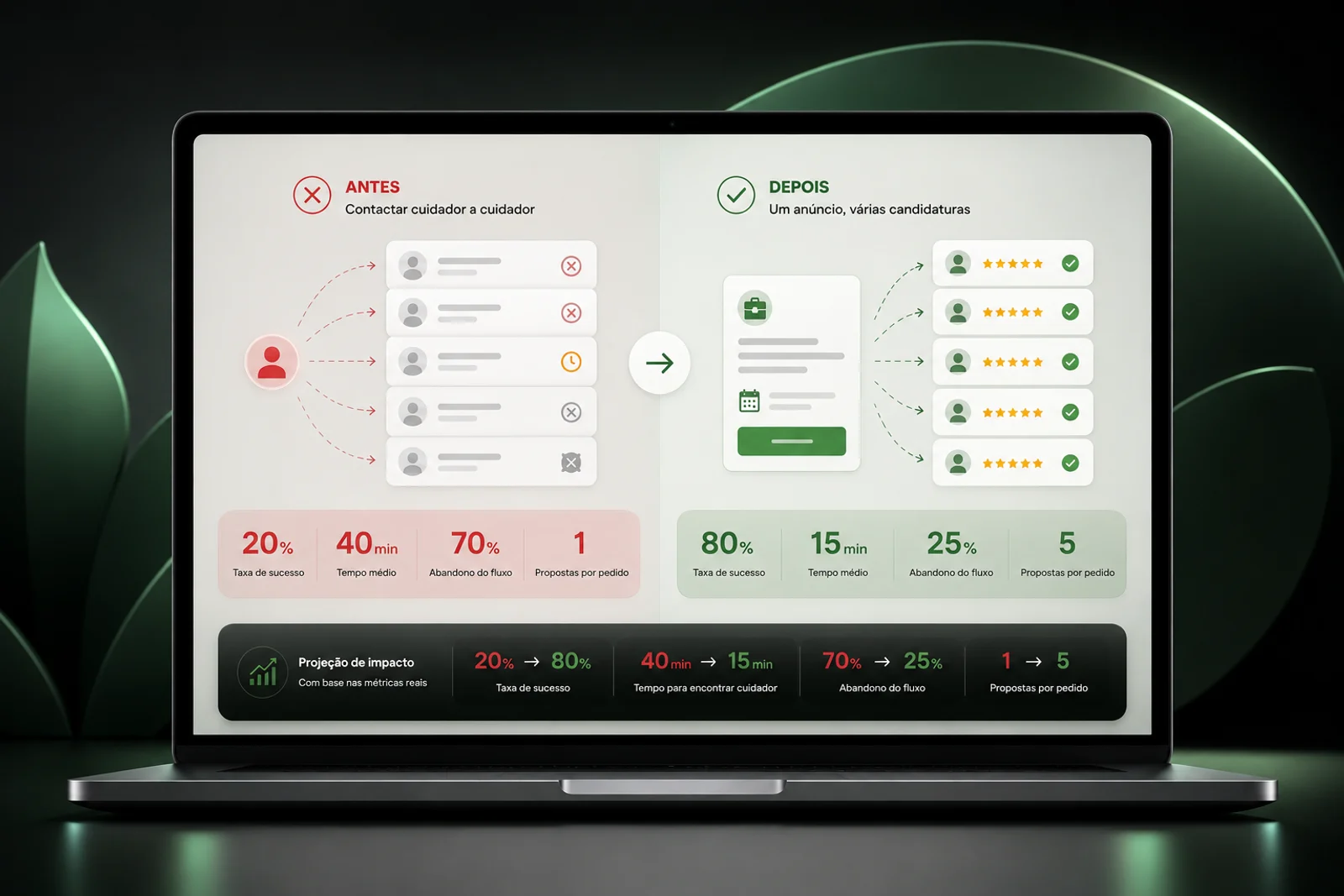
The numbers showed where it hurt
We went to Google Analytics and the platform logs before touching the design.
- Success
- 20% of bookings reached the end
- Time
- 40 minutes, on average, to find a carer
- Abandonment
- 70% left midway through the flow
- Contacts
- 4 to 5 carers until one accepted
Search, request, wait, repeat
The family picked a carer, sent a request and waited. If they didn't accept, it all started over.
We mapped the journey step by step to understand where people gave up, and how many times they repeated the cycle.
What people told us
- Fatigue from contacting several before anyone replied
- Calendars showing availability that didn't exist
- On the carers' side, isolated requests and cancellations
The problem wasn't a lack of carers. It was the family having to chase them one by one.
Flipping who searches for whom
A request reached one carer at a time, and each rejection cost another round.
The family posts a listing with the service, date and details. Several carers apply and the family compares profiles, ratings, price and availability on a single screen.
From listing to confirmation
- Create a listing with service, date and details
- Receive applications and compare side by side
- Confirm, with everything recorded
What remains to be proven
Are the after numbers measured or estimated?
Estimated. The project was paused before the new flow went into production, so there's no real after data.
The projections were modelled from the real metrics of the old flow. The before is measured, the after is a grounded expectation.
What worked and what was left unresolved
The diagnosis worked. The numbers and the feedback pointed to the same place, which gave the confidence to change the model rather than polish it.
What was left unresolved is supply density in areas with few carers. An application system needs people to apply, and where there aren't any, the problem remains.
The before and the projected after.
Projection estimated from the real metrics, had the process moved forward.
This case study focuses on a single flow, the most important on the platform: how a family finds and closes with a carer. The full product is in TomaConta.